

How To Draw Out Of Focus Background
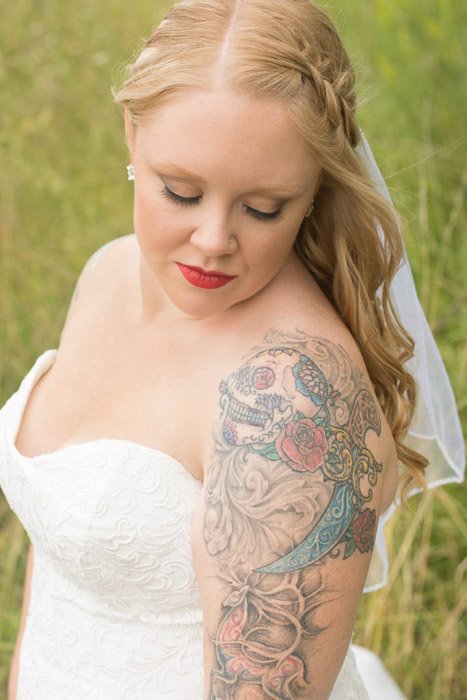
A blurred background draws the focus to what's important. Information technology besides ofttimes plays a part in differentiating the professional person portrait from the casual snapshot.
Only how, exactly, do you lot create a blurry groundwork? Through a mixture of gear, settings, and subject field placement.
Here's how.
[ExpertPhotography is supported past readers. Product links on ExpertPhotography are referral links. If you use i of these and buy something nosotros brand a piffling bit of money. Demand more info? See how it all works hither.]


What Yous'll Demand to Create a Blurred Background
The gear that you use volition make that blurred background easier or more than difficult to reach. While getting that background blur isn't all virtually the gear, it's a big function of the equation.
Hither'due south the gear that'southward best for background blur, and why.
Camera With a Larger Sensor
This tin can exist a mirrorless or DSLR camera.
The larger the camera sensor is, the easier it is to get that background blur. That'southward why you see smartphone companies creating simulated background mistiness through software in portrait modes. The sensors are then small that it's difficult to create that background mistiness in photographic camera.
A full frame photographic camera will become you the virtually background blur (unless of class you have the budget for medium format). Just fifty-fifty a budget DSLR or mirrorless camera or a compact photographic camera with an APS-C sensor inside will still offer a practiced amount of that background blur.
Wide Aperture Lens
The aperture of the lens is i setting that helps create that groundwork blur. But dissimilar lenses accept different aperture settings available. Ideally, for a blurred background, you should use a lens that has at least an f/2.eight aperture available.
Lower f-numbers volition offer even more blur. A 50mm f/one.8 is even better, with several manufacturers offering options for less than $300.
An f/1.4 is fifty-fifty blurrier, just these lenses sit down at a much higher price point.
Telephoto Lens (Optional)
Contrary to popular belief, a lens with a longer focal length doesn't actually create more blur. However, the longer the focal length, the more compressed (or closer) that background appears.
That brings that blur closer and tends to exaggerate the blur more than brusk lenses.
Background mistiness is exaggerated with a longer lens. But information technology'due south notwithstanding possible to go nice background blur with a wide bending lens.
Note that portrait photographers also tend to prefer longer focal lengths. These also tend to be more than flattering.
How to Blur a Background Using Aperture
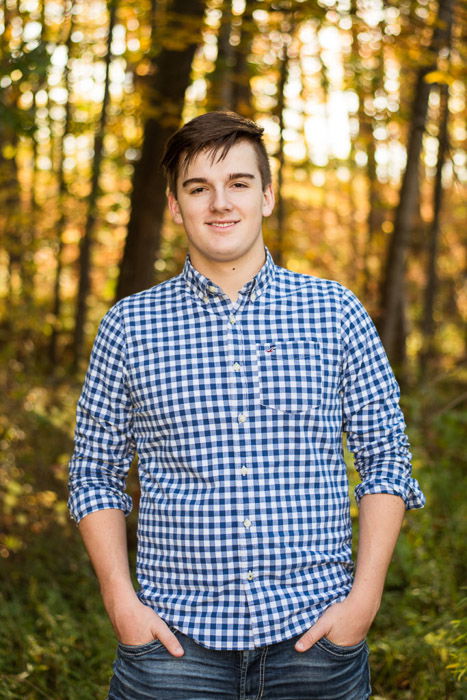
Gear is role of the equation, but the photographic camera settings are just as essential. The photographic camera setting that determines that background blur is called aperture. This refers to how wide (or narrow) the hole in the lens is.
Aperture is designated past f-numbers; college numbers mean a smaller lens opening. An f/one.eight is a broad discontinuity, and f/11 is a narrow aperture.
A wide discontinuity will create what'due south called a shallow depth of field. In an image with a shallow depth of field, very little of the image is in focus.
There may exist an inch of distance in the image that'southward sharp, and the residuum of the objects outside that range is blurred. That shallow depth of field is fundamental to getting that background blur.
The narrower your aperture is, the more of the prototype is precipitous. That tiny bit of distance that's in focus at f/i.viii expands as you increase the aperture.
A broad aperture creates that soft, blurred groundwork. A narrow discontinuity leaves more than of the image in focus.
Merely because a wide aperture creates that blurred background doesn't mean you always desire to shoot portraits at the widest discontinuity that your lens allows. If you lot shoot a group photo at f/1.viii, nigh of the grouping won't be in focus.
That boosted depth of field is needed when taking portraits of more than ane person, unless anybody is standing the exact same distance from the camera.

Fifty-fifty when photographing a single person, don't exit the aperture at the widest possible setting. A narrower discontinuity might be necessary to go both optics in focus if the subject is standing at a slant.
The portrait background is an important part of the image in ecology portraits, for example. And then employ a narrower aperture to continue more than of those background details intact.
Then how exercise you conform the aperture for that background blur? Use aperture priority mode on your camera, or, manual manner for more advanced users.
Every camera is a bit different. But typically in that aperture priority mode, 1 of the control wheels on the right side of the camera adjusts aperture. On some cameras/lenses, the aperture command is effectually the lens butt.
You lot should see those f-numbers change as you move the control. This volition be either on the screen or displayed on the viewfinder. If you lot're unsure, consult your camera's user manual.
Every bit you lot adapt your aperture, make sure the shutter speed doesn't fall too low. You'll end up with an entirely different kind of blur (and not a pleasant one either).
As a guideline, you should be using a shutter speed with that bottom number at or college than the lens you are using. A 50mm lens should apply at to the lowest degree 1/50th handheld, for instance.
If the shutter speed drops besides low while in aperture priority mode, increase the photographic camera's ISO.
Discontinuity priority mode will get you started shooting those blurry backgrounds. But manual mode volition help you balance information technology all and control the unabridged exposure. Acquire more most manual mode here.
How to Blur a Background With Field of study Placement

Aperture and gear plays a big role in how blurred that background looks. Merely in that location's one more piece to the puzzle on soft backgrounds — and it'southward the simplest of the bunch.
A lens focuses based on distance — something the same distance from the photographic camera as the subject volition be just equally sharp.
The farther abroad the groundwork is from the subject, the blurrier that groundwork will be. If you accept a portrait of someone leaning against a brick wall, even at f/1.viii, that wall will but exist slightly blurred.
Endeavour taking a portrait of someone standing several anxiety in front end of that same wall. The wall volition create a much softer background.
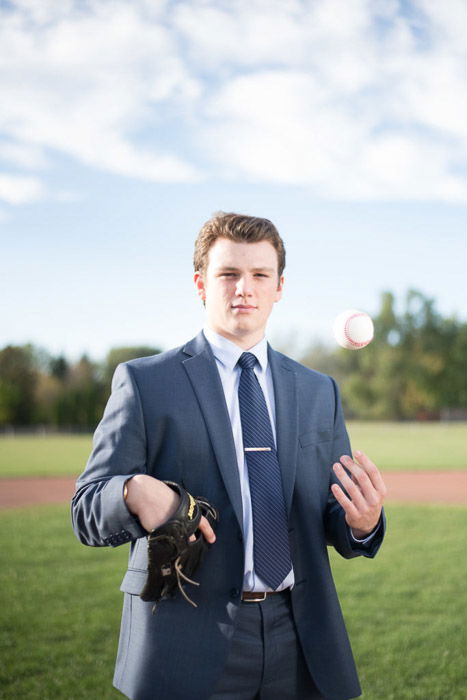
Try moving the subject area further away from the background. Or add together more empty infinite between the subject and the groundwork. This will help create more of that blur.
How to Create Bokeh in a Blurred Background

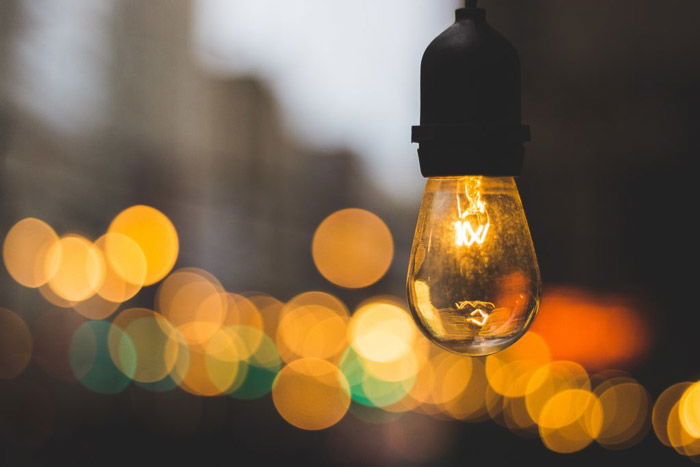
Bokeh is a photography term that stems from a Japanese discussion meaning blur. Bokeh refers to the quality of the blur in an image. Simply it's oftentimes also associated with the round, out-of-focus points of light in an image.
Those blurry lights often create an excellent background. This leaves many new photographers asking how to create bokeh.
The answer is simple — create that background blur using gear, aperture and altitude. Only use a background with many points of light.
Christmas lights or twinkle lights in the background, for example, create excellent bokeh.
Twinkle lights aren't the only way to create bokeh. Highlights or bright points in the background can also exist rendered equally circular bokeh. For instance, the sun striking the leaves on a tree in the background.
The lights of a city skyline, the glow of a crackling fireplace, a crumpled piece of tinfoil — at that place are many different ways to create bokeh. You just take to detect it and mix with aperture, subject placement and gear.
Learn to look for lights and highlights. And so yous'll exist able to find easy backgrounds that create first-class bokeh.
Conclusion
A blurred background is created through a mix of gear, discontinuity, and subject field placement. Photographers tin can combine all three to create the virtually background mistiness. Or you can mix and lucifer to what's bachelor.
If y'all don't have a broad discontinuity lens, y'all can create more distance between the subject and the background. If you want the subject posed against a brick wall, you can use a wide aperture lens. Information technology will make that groundwork as soft as possible.
Remember, blurry backgrounds are a mix of:
- Gear (broad aperture lens, larger sensor)
- Aperture (lower numbers mean more than blur)
- Distance betwixt the discipline and the background (more distance means more blur)
Adding in lights or merely highlights from the bachelor natural light, adds round, blurry lights to create first-class bokeh.
Used together, a blurred background tin can hibernate away all the distractions and depict the middle to the bailiwick.

Source: https://expertphotography.com/blurred-background-portrait/
Posted by: woodfordgaird1974.blogspot.com
0 Response to "How To Draw Out Of Focus Background"
Post a Comment